Why are so many gifts quickly forgotten?
Gifts are often quickly forgotten because they become "just another thing" without any personal or emotional charge, whereas we remember moments that come with a strong feeling. A gift does stick thanks to personal meaning, a special moment of giving and repetition across several moments.
Carmen Molendijk ·
Sound familiar? You get a gift, you're excited at the time, and a few weeks later you can't quite remember what it was. It happens to almost everyone, and we think it says something interesting about how gifts actually work..
The problem: too many gifts, too little meaning
We give and receive gifts all the time (lucky us!). Birthdays, Christmas, anniversaries, little treats in between. With that many, a gift quickly becomes "just another thing" among all the other things. Without a clear emotional charge it soon disappears into a cupboard, a drawer, or simply out of our memory. Anyone looking for a way to prevent that soon ends up asking how to find a unique gift that stands out from the rest? Because that is what sticks, and doesn't end up somewhere in a drawer or cupboard.
What makes a gift stick?
Research on memory and emotion shows that we remember moments that come with a strong feeling, not necessarily a high price. A cheap gift with a personal message often sticks longer than an expensive gift with no context at all, funny, right? That means you can get away with spending a lot less if you just think a little longer ;-).
Three factors play a big role here:
- Personal meaning. A gift that refers to a shared memory or joke is hard to forget.
- The moment of giving. How the gift is handed over, or discovered, is often just as important as the gift itself.
- Repetition. A gift that stretches across several moments, instead of being opened once, increases the chance that it sticks.
Why standard gifts are forgotten so quickly
A gift card, a set of personal care products, or something generic from a web shop usually lacks that personal layer. It is functional, but not meaningful. Not because it was badly meant, but because there is no story attached. That same lack of personal charge is exactly why we wrote earlier that a gift without stuff can sometimes make more of an impression than a physical product: it's not about what you give, but about what it conveys.
How can you prevent this yourself?
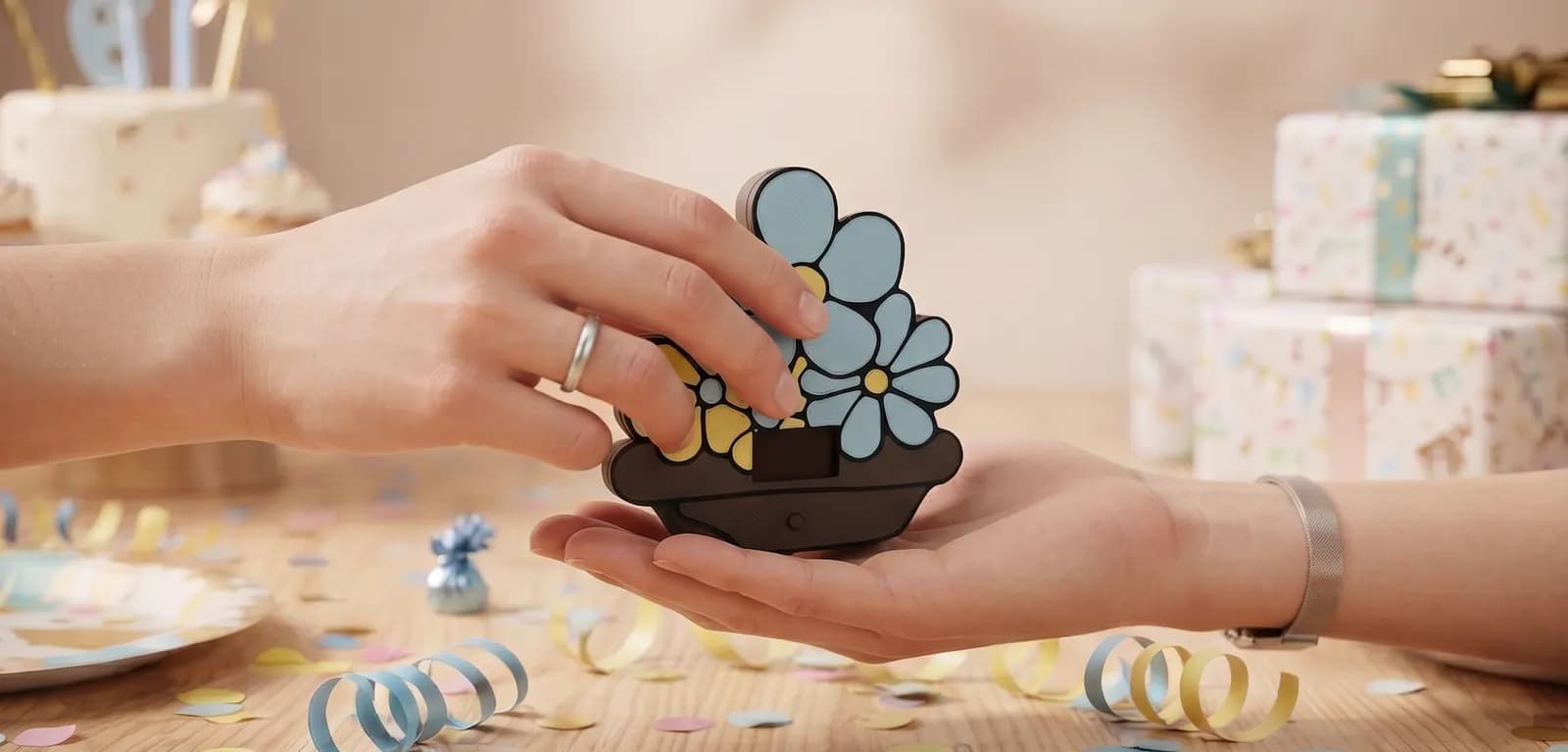
If you want your gift to stick, look beyond the gift itself. Add a message, work in a memory, or spread the gift over several days instead of one moment. That last one is exactly what a Wishly is built for: instead of one gift that you open in a few seconds and put away again, the recipient receives a new, personal wish day after day, built into a WishTree, WishBear or WishFlower. That way the gift doesn't stick as "that one moment", but as a series of moments that build up into a lasting memory, something you can read about in "Gifts with emotional value" in more depth.
So...
Gifts aren't forgotten because they're unimportant, but because they often come with too little personal charge. Attention, not price, turns out to be the deciding factor time and again.